Phil Ashley

LEED From Behind: Why We Should Focus on Greening Existing Buildings

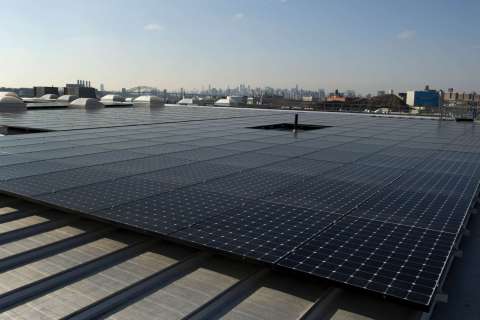
In an era of LEED-certified construction and growing concern for sustainability, it comes as a surprise that constructing new, energy-efficient buildings can be less eco-friendly than renovating old ones. A study by the Preservation Green Lab of the National Trust for Historic Preservation shows building reuse almost always has fewer environmental impacts than new construction—which means we’d be smart to spend at least as much time renovating existing buildings as we do lionizing fancy new green construction.

Read More »

Getty Images

State of the Union: From Climate to Clean Energy to…Fracking?

Well, he mentioned the ‘c’ word this year. Last year President Obama raised more than a few eyebrows when he failed to talk about climate change during his State of the Union—something even his Republican predecessor George W. Bush, no friend of the environment, usually managed to work in. But last night Obama did cite climate change, albeit in a rather roundabout way, criticizing Congress for being too deeply divided to pass comprehensive climate legislation—or for that matter, the clean energy standard that was a central piece of his 2011 State of the Union speech. So the President does remember how to say the word “climate.”

But global warming was barely a passing reference in the speech—quite unlike something that surely has many greens worried: a call to increase domestic oil and gas production.

Read More »

AFP/Getty Images

Political Pollution: How Bad Air is Slowly Changing China

China confirmed this week that the number of its citizens living in cities has surpassed the rural population for the first time in its history. That massive urbanization — 690.79 million people are now city-dwellers according to the National Bureau of Statistics — has brought huge benefits, chief among them lifting hundreds of millions out of poverty. But it has also led to serious problems, perhaps none more so than the increasingly foul air in these heaving metropolises that are growing bigger, busier and dirtier by the day. In Beijing the situation has become so bad the capital’s airport has repeatedly been forced to close temporarily in recent months as dense smog prevented take-offs and landings. Meanwhile, the air has been so thick that residents have struggled to see across the road.

Read More »

Neil Beer

Fracked: The Debate Over Shale Gas Deepens

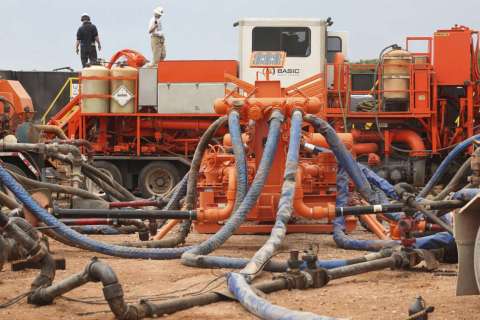
Is shale gas good for us or not? Most of that argument has been over the potential risks that hydrofracking for shale gas might pose to water supplies—risks that were highlighted again this week when the Environmental Protection Agency (EPA) came to Dimock, PA, to test groundwater in the area. You might know Dimock from the anti-fracking film Gasland—a group of residents have claimed for years that fracking poisoned their water supply, and federal involvement indicates there may be more at stake.

But while water has been the focus of the fracking wars, there’s another debate going on over a hidden aspect of shale gas: its contribution to global warming. Conventional natural gas is by far the cleanest of the fossil fuels—not just in terms of toxic pollutants like ash or sulfur dioxide, but in terms of carbon as well, with a greenhouse gas footprint perhaps half that of coal. But a group of scientists at Cornell University, led by the ecologist Robert Howarth, challenged that consensus in a paper published last year claiming that shale gas might actually be worse for the climate than coal. Their conclusions were heavily criticized by the gas industry as well as some independent experts, and earlier this month another set of Cornell scientists—led by the geologist Lawrence Cathles—published a paper arguing that Howarth’s numbers were wrong, and that shale gas was indeed much less carbon-intensive than coal. And that paper in turn prompted another article by Howarth and his colleagues yesterday make the case that, no, they were right all along.

So what does this all mean—other than the fact that the Cornell faculty club may be getting a little testy these days? Is shale gas good for the climate or bad?

Read More »

Patricia Fenn Gallery

The Global Energy Supply Is Getting Greener. It’s Just Not Happening Fast Enough

With President Obama’s rejection (for now) of the proposed Keystone XL oil sands pipeline fresh in everyone’s mind—and conservatives and the oil industry already hammering him, even as greens sing his praises—you can be sure that energy issues will play a bigger role than usual in the 2012 election. So it’s worth taking a step back and figuring out where we are globally on energy. What’s rising, what’s falling—and how much oil, gas, coal and renewables will we need and use in the decades to come?

Thankfully, our friends at BP have just released their annual Energy Outlook, a compendium of current global energy stats and a prediction over how that picture will change over the next 20 years. A couple of caveats: one, BP is, of course, primarily an oil and gas company, so it wouldn’t be surprising to see their expectations of future energy use skewed towards fossil fuels, while possibly undercutting renewables and efficiency. Second, every attempt to look very far into the future of energy is by its nature a doomed enterprise. Technologies change, economies rise and fall and disasters happen. Any attempt to pinpoint how we’ll be using energy two decades into the future is—if we’re lucky—an educated guess.

With that out of the way—what does BP’s vision of the energy future look like?

Read More »

Andrew Harrer / Bloomberg / Getty Images

Pipeline Politics: Keystone Is Dead (For Now). What Happens Next?

Chalk a win up for the environmentalists. On Wednesday, the White House announced that it was rejecting—on the recommendation of the State Department—the proposed Keystone XL pipeline that would have brought 700,000 barrels a day of oil sands crude from western Canada into the U.S. In many ways the announcement—forced by Congressional legislation passed late last year that required an expedited decision on the pipeline—reinforces a move made by Obama in November to essentially kick the final decision on Keystone XL to 2013, after the Presidential election. But Congress forced Obama’s hand, and left him little choice but to stop the pipeline for now, as the President made clear in a statement:

 As the State Department made clear last month, the rushed and arbitrary deadline insisted on by Congressional Republicans prevented a full assessment of the pipeline’s impact, especially the health and safety of the American people, as well as our environment.  As a result, the Secretary of State has recommended that the application be denied.  And after reviewing the State Department’s report, I agree.

So why did Obama and the State Department decide to reject the pipeline? And does this mean the Keystone issue has been settled once and for all? Read More »

Andrew Harrer / Bloomberg / Getty Images

Pipeline Politics: Obama Administration to Reject Keystone Pipeline

WASHINGTON (AP) — A senior Obama administration official says the White House will reject a Canadian company’s plan to build an oil pipeline from Canada to Texas.

The official, who spoke on condition of anonymity because the decision has not been announced, says a February deadline set by Congress doesn’t allow for a proper review of the $7 billion project.

The Feb. 21 deadline was set by a GOP-written provision as part of a tax bill that Obama signed into law just before Christmas. Obama had until that date to decide whether the pipeline was in the national interest.

The 1,700-mile pipeline would carry oil from tar sands in western Canada to refineries in Texas. It would pass through Montana, South Dakota, Nebraska, Kansas and Oklahoma.

LatinContent/Getty Images

Amazonia: What’s Happening to the World’s Biggest Rain Forest?

I’d say you have to see the Amazon for yourself to understand how vast it is, but I’ve been there—and even I can’t imagine it. The rain forest is more than 2 million sq. miles—two-thirds the size of the continental United States—and the river system of the gigantic basin produces 20% of the world’s freshwater discharge. The forest holds 100 billion metric tons of carbon—equivalent to more than 10 years’ worth of global fossil-fuel emissions. And the Amazon is the global capital of wildlife biodiversity, with more species calling the forest and rivers home than scientists could ever hope to name. It’s safe to say that as the Amazon goes, so goes the planet’s environment.

The problem is that the Amazon is anything but secure. As Amazon basin nations like Brazil have grown economically, they’ve moved to cut down the forest, making room for agriculture. (Which, it should be noted, is exactly what Americans did to their own once vast Eastern forests.) The human population in the Brazilian Amazon has grown from 6 million in 1960 to 25 million in 2010, while forest cover has declined to about 80% of its original area. Deforestation rates have slowed in recent years, but as a new review in this week’s Nature shows, the Amazon basin is changing, under pressure from natural variability in the weather, drought, global warming and deforestation. The question remains: just how resilient is the Amazon?

Read More »

John Macgregor / Getty Images

Bat Signal: More than 5 Million Bats Dead From White-Nose Syndrome

An animal apocalypse is happening right beneath our noses in the Northeast. Since 2006, bats throughout New York, Pennsylvania, Vermont, New Jersey, Indiana and other states have been infected with a deadly white-nose fungus that has decimated animal populations. But because it is hard to track bat numbers—and because the disease causes afflicted bats to act strangely, often flying far from their nests where they may never be found—it’s been difficult to pin down just how severe the disease has become.

A new estimate released yesterday by the U.S. Fish and Wildlife Service (FWS), however, suggests that the toll is far worse than wildlife biologists believed. Between 5.7 million and 6.7 million bats are estimated to have died from white-nose fungus—five to six times more than a previous count done in 2009. Unless the bats can adapt to the fungus—or a treatment can be found—there is a real change that many bat species could be virtually wiped out in the Northeast, with serious consequences for the ecology of the region.

Read More »

Manoj Shah

Under the Weather: How La Niña May Influence the Outbreak of Flu Pandemics

There are two things you can be certain about when it comes to flu pandemics: they’re inevitable and you never know when one will strike. That unpredictability makes it difficult to prepare for a pandemic — some 40 years passed between the pandemic of 1968 and 2009, yet only a little more than a decade passed between the pandemic of 1957 and 1968. Scientists know that wild migratory birds are the primary reservoir for human flu, and that a pandemic ignites when a new flu virus makes its way into the human population. But they can’t predict when it will happen.

A new study by researchers at Columbia and Harvard, however, may shed some light on that on the pandemic mystery. Writing in the Proceedings of the National Academy of Sciences (PNAS), Jeffrey Shaman of Columbia’s Mailman School of Public Health and Marc Lipsitch of the Harvard School of Public Health theorize that the recurring La Niña weather pattern — which happens when sea surface temperatures in the central Pacific Ocean become colder than normal — may help trigger pandemics by altering the flight paths of those migratory birds, which may lead to the rise of new flu viruses.

Read More »