



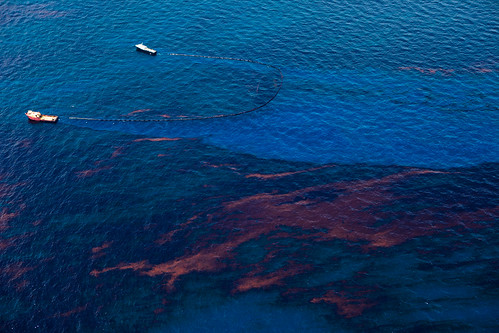
From TEDxOilSpill Expedition
I’m at the TEDxOilSpill event in Washington DC, which has just broken for lunch. (What’s the diet of very smart people—and the journalists who listen to them? Roast beef sandwiches.) The first half of the conference focused first on communicating just what’s happening down in the Gulf—both from people on the ground, including TEDx’s own oil spill expedition, and with new tech tools like OilReporter, which can effectively crowdsource covering the spill to anyone with a smartphone. (Which I guess means that I can knock off for the rest of the year.)
The big news came right before the lunch break. Francis Beland, a VP at the XPrize Foundation, announced that the group would be offering a $10 million XPrize for smart ideas on how to handle the oil spill. In the past the XPrize people have offered similar awards for coming up with awards for private spaceflight, or geonomics, or ultra-efficient automobiles. This one will be a little different—the oil spill response is so in flux that Beland told the audience XPrize will actually be taking recommendations for what the dimensions of the problem actually should be. (Although the focus will be on oil spill cleanup—Beland said they’d considered funding a prize specifically focusing on capping the blown well, but couldn’t get any data from BP, which is in no way surprising.) Interested amateur geniuses can contact him at: francis@xprize.org. My vote is with the oil-eating, self-propelled underwater robot that I keep hearing about.
I’ll write more later about the specifics of the presenters, including a heart-rending talk from Casey DeMoss Roberts of the Gulf Restoration Network—a Louisiana-based environmental group—who spoke about her father, a deepwater drilling engineer who was lost on a rig in the Gulf of Thailand when she was just 17 years old. But right now the entire event is working better than I expected. I was a little skeptical when I first heard that a TED group was going to tackle the oil spill. The gap between the organizations techno-utopian ideals and the dirty politics and on the ground agony of the Gulf spill seemed to great to bridge. But there’s clearly something here—something you can see in the expedition’s great photos and in the stories that people like the World Wildlife Fund’s Daron Collins brought back from the trip. And there really could be technological solutions to this spill that haven’t been fully tried—Ronald Atlas, a microbiologist with the University of Louisville, spoke about the potential for bacteria and bioremediation to speed the natural cleanup of the oil.
But there are disagreements too. Lisa Margonelli, director of the energy policy initiative at the New America Foundation, told the audience that too often we focus on the morality of oil—treating the symptom of our oil addiction with drilling moratoriums and similar rules—without addressing the final cause: our consumption of petroleum. But she was followed by Andrew Sharpless, the CEO of the green group Oceana, who emphasized the need for an immediate ban on new offshore drilling. But as Margonelli pointed out, if we ban drilling here—and don’t attack oil consumption—we’ll just oursource drilling to countries with even worse environmental records. (To which Sharpless replied: well, someone has to lead.) We’re learning at TEDx that what feels good when it comes to responding to the oil spill may not always be what is good.
You can follow the second half of the conference here.