



 On Wednesday, the UN’s Food and Agriculture Organization announced that food prices for basic commodities had hit record highs last month – above and beyond the soaring prices in 2008 that sparked worldwide protests and food hoarding from Haiti to Egypt to the Philippines. Though the news has yet to evolve into the kind of crisis that unfolded that year, this round has not been without incident. In November, in China rioted in their cafeteria over the increase in school lunch prices (our story on that here) and just yesterday, protests broke out in Algiers after sharp rises in the price of milk, flour and sugar in Algeria.
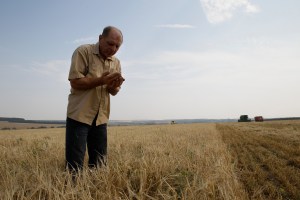
How did we get here again? A lot of reasons, but chiefly because a year of unpredictable and bad weather, says Abdolreza Abbassian, an economist and Secretary of the Intergovernmental Group (IGG) on Grains with the FAO. Crop failures, or at least major crop disappointments, in Russia, the U.S., Ukraine and Kazahkstan all contributed heavily to driving up grain prices, while new middle-class demand played more of a role in other markets, like sugar and soy. Unlike in 2008, when it was hard to pinpoint what caused the spike as oil prices were soaring, the biofuel industry was expanding, and the world was on the cusp of financial collapse, last month’s highs are more clearly attributable to the kind of unruly weather events the world’s farmers are increasingly having to get used to. (See pictures of the 2008 global food crisis.)
The larger implications for a sustained food crisis at this juncture in the global economy are as hard to predict as they are to overstate. Beyond what it would mean for the millions of people who literally cannot afford to eat when food prices to go up – and that’s a hard fact to get beyond – higher food prices could destabilize whole economies. When large swaths of the large and influential middle classes in nations like China and India have to switch to using the bulk of their dispensable income on food, and stop their habitual consumer spending, the financial recovery happening in those places – not to mention in countries like the U.S., who are counting on those recoveries to bolster their own — could be pushed to the brink.
(Read Michael Schuman’s prescient take back in August on rising food prices at the Curious Capitalist.)
We’re not anywhere close to that yet. In fact, so far only Russia has instituted a new export ban on its wheat, and that only an extension of a ban put into place after their bad wheat yield this summer, as opposed to a reaction to the price hike. Still, several governments, worried about further instability or another wave of protectionism like the one spurred by rice crisis in 2008, are already taking measures to boost their food security as inflation continues to rise, from freeing surplus domestic grain up and putting it into the market, to calling on banks to offer more support to small farmers. (Here’s a helpful compilation from Reuters on what China, India, Malaysia, Thailand, Vietnam and Indonesia are doing.)
Abbassian says the current situation could correct itself over the course of the year. In 2008, the price peak fell in the summer at the end of the crop season; there was nothing else on the way. “Things looked pretty desperate and worrisome,” he says. “This time around it’s also desperate and worrisome, but it’s happening in the middle of the year. If you could assume there will be normal weather – and I won’t put my money on it – when the harvest comes, there could be a very sharp reduction prices.”
That doesn’t mean that the world can afford to take a wait-and-see attitude. If weather did it once, it can do it again, and taking our chances with mass hunger is unacceptable. Governments and international agencies have to figure out a way both to anticipate and protect the global food supply against the uncertainties the changing climate is serving up. In an opinion piece in yesterday’s Financial Times, the World Bank’s Robert Zoellick applauded France for putting food price volatility front and center in its list of priorities, and urged the rest of the G20 to do the same. He writes:
“When prices of staples soar, the poor bear the brunt. Without global action, peoaple in poor countries will be deprived of adequate and nutritious food, with tragic consequences for individuals and the for the future prosperity of their countries.”
Zoellick outlined several steps that the group should take to achieve better food chain security, including, among other things, improving weather forecasting, establishing humanitarian food reserves in disaster prone and isolated areas, and empowering smallholder farmers through transactions with global groups like the World Food Program (WFP). “The food system itself requires a closer look,” says Abbassian. “I think the world is waiting to know what is the right approach.”