



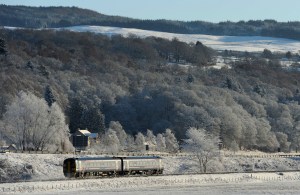
Ballinluig, Scotland
Back in October, I wrote about how the British government plans to sell off a large chunk of the country’s public forests. But like Birnim Wood rising up against Macbeth, the British public has so savagely attacked the plans that it now looks like the government might back down.
On Friday, the Department for Environment, Food and Rural Affairs (Defra) announced that it will postpone the sale of some 40,000 hectares of forest that had been predicted to raise $160 million. That chunk of forest represents about 15% of publicly owned wooded land. Defra will wait until a final decision is made on the rest of the country’s public forests, which is owned by the Forestry Commission, and which the government wants to privatize.
Under fiscal strain, the U.K. government wants to lease large commercial forests to private companies, while allowing community groups to buy or lease forests and also encouraging charities to own or manage historically or environmentally sensitive areas. The Brits don’t like the plan one bit. A recent poll suggested that 84% of people were opposed, and an online protest group has collected 400,000 signatures against the move on a petition.
It’s easy to see why the Brits are upset. Here’s a pithy summary from The Guardian:
Initially, ministers suggested that the sale of the Forestry Commission would help to reduce the deficit, but then had to back down as Defra’s own analysis showed the sale would cost about as much as it would raise. The government also justified the sell-off on the grounds that the Forestry Commission currently suffers from a conflict of interest, as both a regulator and seller of timber, but this was rejected by campaigners.
There was further embarrassment for ministers when it emerged that selling off public woodland could cost millions in lost revenue, as it would widen an existing tax loophole whereby buyers of woodland can avoid inheritance tax….
It’s too tough to say at the moment what David Cameron’s government will decide to do. Defra’s decision to take 40,000 hectares off the market was only a temporary one. After a consultation about what to do with the Forestry Commission ends on April 21, the 40,000 hectares may come back on to the market for sale, and of course the rest of the Forestry Commission’s land may still soon be up for grabs, too.
But still, to witness how an urban-dwelling citizenry (90% of Brits live in cities) can rally around a countryside conservation project is quite inspiring.
I recently attended a debate in which Sunder Katwala of the leftist British think-tank The Fabian Society argued that the way to energize the fight against climate change is to focus on local environmental issues. Katwala’s point is that people care about things that seem nearby and relevant—such as keeping plastic bags off the street, or saving their local forest. The pressure these sentiments put on politicians—while not directly related to emissions cuts and climate change—compel representatives to address all environmental issues seriously, including climate change.
The British public overwhelmingly agrees in the importance of protecting its forests. In the long-term, that means protecting those forests from the stresses and diseases brought by climate change, too.
(More on TIME.com: See pictures of Robin Hood, hero of Sherwood Forest, through the ages)