



Getty Images
Most of us learned about “the plague” or “the Black Death” a long time ago – reading Boccaccio and Petrarch, sitting in high school history class, and even from that debate about the nursery rhyme “ring-a-ring of roses.” But scientists have uncovered a link between this historic threat to human health and one that only emerged in popular consciousness fairly recently: climate change. A new study in the Proceedings of the National Academy of Sciences reveals that plagues can get worse when the climate gets wetter in northern China, suggesting that climate change – which has been shown to cause wetter climates – could bring more potent plagues in northern China and North America.
“We have found (a) very clear relationship between the amount of precipitation and the occurrence of human plague: the more precipitation, the more plague in the north of China whereas less in the south,” study author Nils Stenseth told LiveScience.
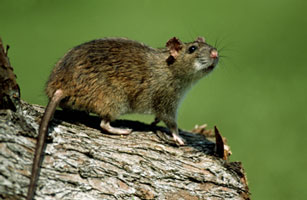
For those of you who didn’t pay enough attention during biology, human plague is generally brought by rodents and their fleas. The fleas transfer the bacterium Yersinia Pestis to rodents through a bite, though the plague bacillus can enter the body through human coughing and the resulting inhalation of bacterium-laden droplets. The plague has caused the deaths of millions of people worldwide, the wiping out of much of Europe’s working population in the Middle Ages, and maybe even a (justified) aversion to rodents.
Stenseth’s team found that more cases of plague occurred in periods with more rain in the generally dry northern China. This is probably because the wetter conditions promoted vegetation growth, thus giving flea-infected rodents more to eat – and more rodents with Y. pestis fleas mean more plague.
Interestingly, the reverse seems to be true in more humid parts of China: plague incidence decreased as rain increased. Stenseth and his researchers haven’t quite figured out why, but they’ve thought of a couple of possibilities: heavy rain may inhibit flea growth, for example. Or maybe rats can’t deal with rainy days, dying in floods and cutting off the pathogen’s path to humans.
Should the rest of the world be worried? Perhaps, according to MSNBC:
Stenseth said that North America has a similar relationship between rainfall and plague to what was found in northern China, where plague increased with more rainfall. “However, in North America one expects less precipitation,” he said, meaning that the future increase in rainfall would likely be less in North America than in northern China.
And study author Zhi-Bin Zhang brought up the point that the reverse result – that drought could bring more plague – might threaten dryer regions.
But like so many of these studies, more research needs to be done. The team is looking to conduct further studies over a longer term and on a larger scale, and Stenseth cautions us not to panic:
“I think there is no reason to fear a big epidemic, because antibiotic treatments are much more developed today than in the past,” he said, adding that we do need to be vigilant since pests can evolve resistance to such antibiotics. He suggests experts and officials should prepare for different epidemics in the future by learning more about the evolution of drug resistance.
I’m eager to hear more, but will generally be staying away from rats – whether or not it’s raining.