



Ashley Cooper/Visuals Unlimited, Inc.
It’s a very good thing that neural tube defects are relatively rare in the U.S., because they are very cruel conditions for a newborn to suffer. The two most common types of such birth defects are spina bifida – in which the backbone and spinal canal do not close properly — and anencephaly, in which a large portion of the brain and skull are simply missing. There are about 3,000 babies born in the U.S. with neural tube defects each year, or about .75 for every thousand live births.
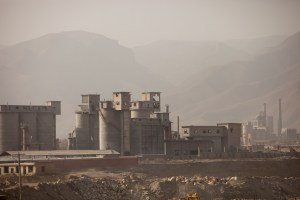
The numbers are much grimmer in China, particularly in the Shanxi province, where there are roughly 14 neural-tube defect babies born per thousand. The Shanxi province is also flat-out filthy — an environmental disaster area, awash in what are known as persistent organic pollutants (POPs), which include various kinds of pesticides as well as byproducts of burning coal and oil. The association between environmental cause and birth defect effect seemed impossible to deny, but until now, a rigorous study of the link had not been fully conducted.
Now, thanks to a 10-year collaboration between investigators at the University of Texas at Austin and Peking University, it has, and the results are sobering. According to findings recently published the Proceedings of the National Academy of Sciences, Shanxi kids exposed to pesticides and fossil fuel pollutants in utero have a 450% increased risk of neural tube defects, compared to other, unexposed kids.
“We’ve suspected for a while that some of these pollutants are related to an increase in birth defects,” says Richard Finnell, professor of nutritional sciences and lead author of the paper, “but we haven’t always had the evidence to show it.”
Finnell and his colleagues conducted their work by analyzing the placentas of 80 newborn or stillborn babies with either spina bifida or anencephaly. All of the babies had unusually high levels of two pesticides: endosulfan, which is used to treat cotton, apples, tomatoes and potatoes and is currently being phased out in the U.S.; and lindane, now banned in the U.S. but once used by farmers growing barley, corn, oats, rye sorghum and wheat seeds. The placentas were also contaminated by various kinds of industrial solvents.
Even worse than those toxins are what are known as polycyclic aromatic hydrocarbons (PAHs), given off when fossil fuels are burned.These too were elevated in the babies in the study. “This is a region where they mine and burn a lot of coal,” Finnell said. “Many people cook with coal in their homes. The air is often black.”
Finnell compares the conditions in Shanxi with those in the U.S. a century ago, but some American cities suffered under that kind of pollution load a lot more recently. In the 1950s, the air in Pittsburgh was so befouled by the then-surging steel industry that window sills would turn black in the course of a single day and businessmen would carry an extra shirt to work with them in the mornings — the better to look fresh in the afternoon after the grime in the air had made their collar go gray by lunch.
The answer, as China is belatedly coming to realize, is to dial back on the country’s heavy dependence on coal-fired plants and to adopt some of the same environmental regulations that the U.S. began implementing as long ago as the 1970s. The stakes couldn’t be higher.
“Ultimately, you need enough cells to make a proper, healthy baby,” says Finnell, “and these are the types of compounds that cause cell death.” If that doesn’t make farmers and industry clean up their acts, nothing will.