



A Ghanaian recycler sifts through e-waste (Photo: EMPA)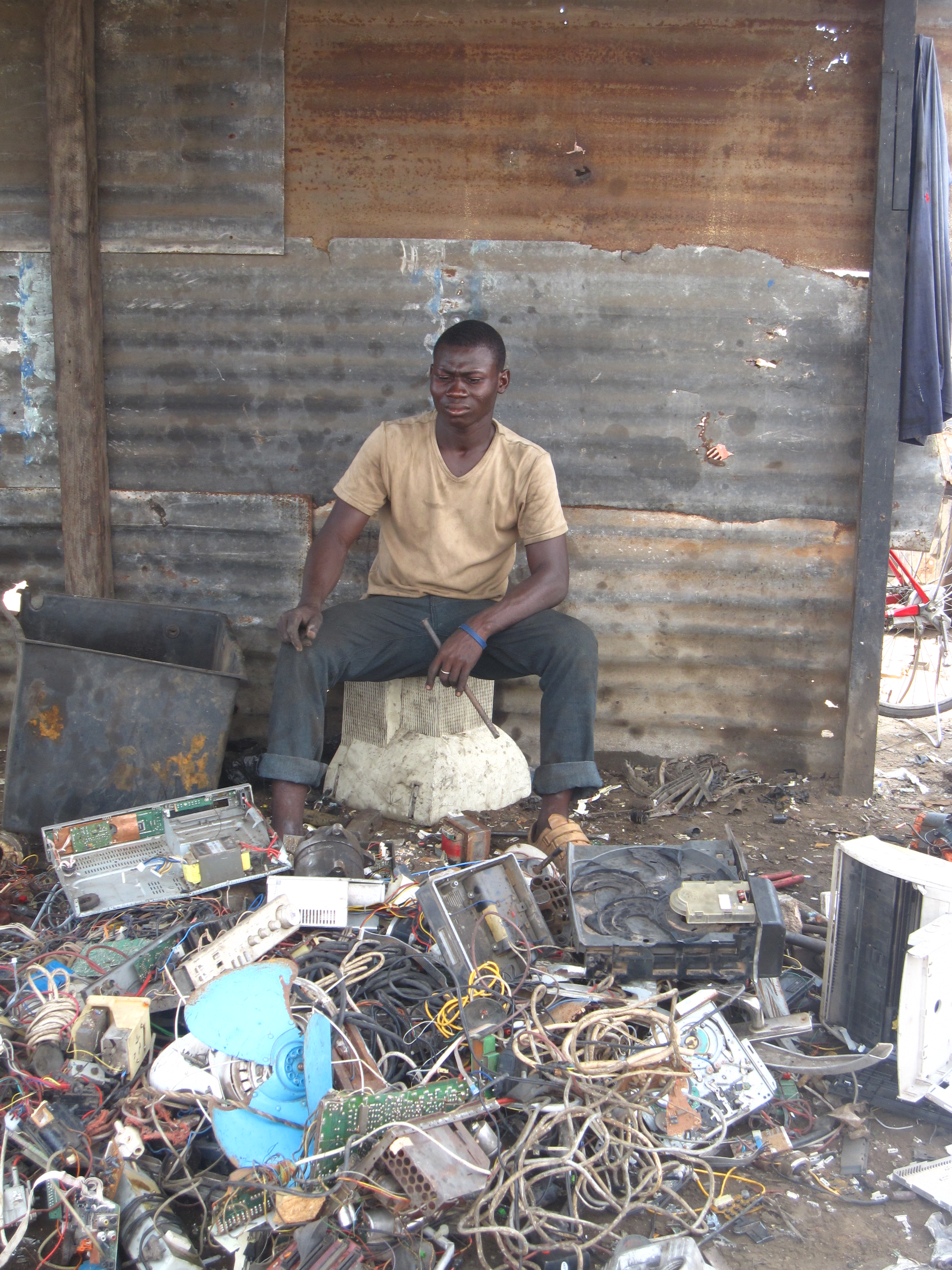
The problem is, Shiny New Things quickly become Familiar Old Things, and nothing seems so discardable as a poky device that no longer runs the latest apps or includes the coolest features. In the U.S. alone, hundreds of millions of old phones, computers and other hardware are junked each year — and that’s a real problem. It’s hardly news by now that electronic devices contain all manner of toxic metals including lead, cadmium and mercury. Nor is it a surprise that mountains of this high-tech junk wind up in developing countries, where they are scrounged for raw materials for resale. International accords forbid unregulated shipments of First World e-waste to Third World destinations, but the rules are routinely flouted and a thriving gray market has sprouted up, allowing the junk to travel freely around the globe.
Now, a study in Ghana — ground zero in the e-waste mess — reveals how toxic the problem can be. Soil, air and other environmental tests conducted by Ghanaian researcher Atiemo Sampson at a school, church, soccer field and produce market near an open-air e-waste scavenging site found that levels of eight metals — iron, magnesium, copper, zinc, cadmium, chromium, nickel and lead — were up to 50 times higher than in uncontaminated areas. Some of the toxins seep through the soil; more still pour into the air when waste is burned.
“Until now, Ghana has not regulated the importation of e-waste,” Sampson said in a recent presentation to a U.N.-run multi-disciplinary group called Stop the E-Waste Problem (StEP). “Rules are only now being incorporated into our national legal framework.”
Ghana is not only an example of how severe the e-waste pile-up is becoming everywhere in the developing world — all the moreso as the commercial arms race among electronic giants escalates, with new products being introduced all the time — but how tricky it can be to set things right. The root of the problem, as with so many things, is poverty.
Electronics are scavenged not because locals like wading hip-deep in e-waste, but because there’s gold to be found in the junk — literally. A mountain of 100,000 cell phones contains an estimated $130,000 worth of scrap gold. That’s along with $100,000 worth of copper and $27,000 worth of silver — a cool quarter of a million dollars in all. Impoverished communities rely on the rubbish as an income source, and governments that can’t provide for them any other way thus wink at e-waste importation. In 2009, Ghana imported 215,000 tons of electronics, 70% of which was used and destined for the trash heap.
“The sheer number of people engaged in informal recycling . . . makes it increasingly unthinkable politically to eject them,” Sampson said. “Any solution must recognize their role and focus on improving health, safety and environmental standards.”
StEP agrees, and recommends both formalizing and regulating how recycling is done, so that people in need of the work can continue to do it, but in a way that’s safe for themselves and their surroundings. That’s easier to say than to do, of course. Of all of the ways an economically struggling country can spend its limited money — health care, schooling, feeding its people — building an e-waste recycling plant does not rank terribly high. Umicore, a Belgium-based materials-processing company, has constructed one such model facility near Antwerp, but that hardly meets the needs of poor Ghanaians.
A cleaner solution — though one that eliminates the income stream that comes from ad hoc recycling — is for electronics companies to design their products with toxic metals in mind, both limiting the quantity they use and making making it easier and safer to extract them. StEP applauds Philips electronics for being an early leader in such “life cycle thinking.” Consumers also need to get smarter. Discarding rechargeable batteries when they no longer work contributes cobalt, nickel and other metals to the waste stream. Retailers and other collection centers often have drop boxes for safe recycling.
The electronics revolution is not going to be slowed — much less stopped or reversed. And at almost all levels — commercial, social, creative, political — that’s a very good thing. It’s only the environmental piece that, as so often happens, is getting neglected. Staying wired and staying green is not easy — but for the sake of public health, it’s essential.