
-THE BULLETIN OF ATOMIC SCIENTISTS (BAS), in a formal statement noting that the Doomsday Clock would be moved five minutes to midnight. The Doomsday Clock was created in 1947 and uses the imagery of a apocalypse—the clock striking midnight—to dramatize the risks of nuclear weapons and other catastrophic threats to humanity. The scientists behind the BAS noted that since 2007 the world had failed to significantly reduce the numbers of atomic weapons in the world, come to grips with climate change or ensure—in the aftermath of Fukushima—that nuclear power had been made less dangerous. With nuclear-armed North Korea going through a potentially destabilizing leadership transition and Iran coming under intense pressure to give up its own nuclear program, it’s hard to argue that the world is getting safer.
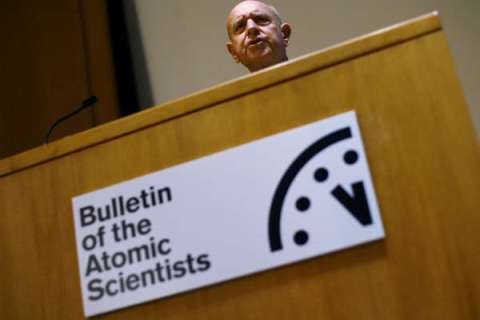
“Two years ago, it appeared that world leaders might address the truly global threats that we face. In many case, that trend has not been continued or been reversed. Fort that reason, the Bulletin of Atomic Scientists is moving the clock hand one minute closer to midnight, back to its time in 2007.”
